★★★★★

“The plan was defensible. It addressed people risk, operational risk, and financial exposure in a way the board could support without hesitation.”

— Ana, CEO

★★★★★

“Robot Integration Lab helped us move from reactive messaging to proactive workforce planning. HR finally had a seat at the table before decisions were locked in. ”

— Jessica F., Chief People Officer

★★★★★

“The strategy connected people decisions to financial outcomes. That made the investment easier to justify and easier to defend.””

— Marcus, VP Operations

★★★★★

“Because the plan wasn’t tied to any vendor, we could evaluate it objectively. That made the financial case clearer and the approval process smoother.”

— Jonathan, Board Chair

★★★★★

“his approach acknowledged legitimate workforce concerns early. That prevented escalation and kept labor discussions constructive instead of reactive.”

— Marleen W., CEO

★★★★★

“The work restored trust at a moment when automation could have fractured it. That alone changed the trajectory of the program.”

— David, Chief People Officer

★★★★★

“Employees stopped asking if they were being replaced and started asking how their roles would change. That shift was critical.”

— Jeff, VP Operations, U.S. Region

★★★★★

“The board deck made our robot plan feel credible, staged, and financially grounded.”

— Jonathan, Board Chair

★★★★★

“I’ve sat through too many change decks… this was the first one our managers didn’t roll their eyes at.”

— Carla, VP of HR

★★★★★

“HR usually gets called in when things go wrong. With your team, we were finally in the room from day one.”

— Luis, Chief People & Culture Officer

★★★★★

“I came into the meeting ready to block this project… and left asking how fast we could responsibly scale it.”

— Elaine, Independent Board Member

★★★★★

“Your team connected risk, people, and returns in a way even our most skeptical directors respected.”

— Mark, Audit Committee Chair

★★★★★

“I’ve been pitched ‘future of work’ for years… this was the first time someone showed me what to do on Monday.”

— Priya, CEO, Manufacturing Group

★★★★★

“Honestly, I expected a tech conversation. What we got was a leadership conversation we should’ve had years ago.”

— Robert, Global CEO

★★★★★

“The conversation wasn’t about robots…it was about people that would work with robots – the entire room was relieved”

— Paulo K, Brazil Sector CEO

★★★★★

“What mattered most was that employees felt respected, not managed. Robot Integration Lab helped us introduce robots without breaking trust or triggering unnecessary labor conflict. ”

— Jessica F., Chief People Officer

★★★★★

“Robot Integration Lab gave HR the language and structure we were missing. Conversations with employees shifted from fear to clarity, and we finally had a workforce plan we could stand behind.”

— Marcus, VP Operations

★★★★★

“Knowing Robot Integration Lab did not endorse any robotics vendor made the decision easy. The board approved quickly because the plan was credible, staged, and financially grounded.”

— Jonathan, Board Chair

★★★★★

“you gave us a robot roadmap both operators and board trusted. Thank you!”

— Ana, CEO

★★★★★

“WOW – and THANK YOU!! The team turned robot fear into curiosity and action inside our leadership group.”

— David, Chief People Officer

★★★★★

“I was told to ‘go get robots’ by the board … and you guys helped my team organize this into step-by-step action plan. THANK YOU ”

— Jeff, VP Operations, U.S. Region

★★★★★

“The board deck made our robot plan feel credible, staged, and financially grounded.”

— Jonathan, Board Chair

When Silence Becomes Policy During Automation — The Labor Signal Leaders Create Without Noticing

When Silence Becomes Policy During Automation — The Labor Signal Leaders Create Without Noticing

Silence is never neutral in a workforce. During automation, it becomes instruction.

When leaders introduce automation but delay answers, employees do not wait patiently.

They interpret.

Why Silence Creates Risk Faster Than Bad News

Employees can adapt to difficult decisions.

They struggle with undefined ones.

  • ■ unanswered questions feel like withheld intent
  • ■ delays suggest decisions are being avoided
  • ■ uncertainty forces personal risk calculations
  • ■ silence invites rumor to fill structure gaps

In the absence of clarity, assumptions harden.

What Silence Teaches the Workforce

Over time, silence becomes instruction.

  • ■ “protect yourself” feels rational
  • ■ internal movement feels risky
  • ■ learning feels optional rather than rewarded
  • ■ leadership intent feels distant

No policy document is required.

Behavior changes anyway.

Why Leaders Misjudge the Impact

Leaders often believe silence buys flexibility.

In reality, it transfers decision-making downward.

  • ■ managers invent answers to stabilize teams
  • ■ HR absorbs pressure without authority
  • ■ informal narratives spread faster than facts
  • ■ later clarity feels reactive, not deliberate

By the time leaders speak, trust has already shifted.

How Robotic Workforce Integration Governs Silence

Robotic Workforce Integration treats silence as a governed risk.

Leaders prevent damage by controlling what is known, what is undecided, and who owns each.

  • ■ explicitly name what decisions are pending
  • ■ publish ownership for workforce-impact questions
  • ■ set visible timelines for clarity delivery
  • ■ separate “not decided” from “not happening”

Clarity does not require final answers.

It requires visible intent.

Executive Questions That Reveal Silence Risk

  • ■ Which workforce questions are currently unanswered?
  • ■ Who owns each answer — by name?
  • ■ What assumptions might employees be making instead?
  • ■ How long has silence persisted?
  • ■ Would delay look intentional from the outside?

Automation rewards clarity, not optimism. If leaders don’t set the policy, silence will.

Name
If you’re responsible for the future of work inside your company, this is where you start.

Quando o Silêncio Vira Política na Automação — o Sinal Trabalhista Criado sem Perceber

Silêncio nunca é neutro para a força de trabalho. Na automação, vira instrução.

Por que o silêncio acelera risco

  • ■ perguntas sem resposta viram suposições
  • ■ atrasos parecem evasão
  • ■ risco passa a ser individual
  • ■ boatos ocupam o vazio

O que o silêncio ensina

  • ■ autoproteção parece lógica
  • ■ mobilidade interna parece arriscada
  • ■ aprendizado perde prioridade
  • ■ intenção da liderança fica distante

Como a Integração da Força de Trabalho Robótica governa silêncio

  • ■ decisões pendentes explícitas
  • ■ donos claros por tema
  • ■ prazos visíveis
  • ■ separação entre “não decidido” e “não acontecerá”

Automação premia clareza. Se a liderança não define, o silêncio define.

Name
If you’re responsible for the future of work inside your company, this is where you start.

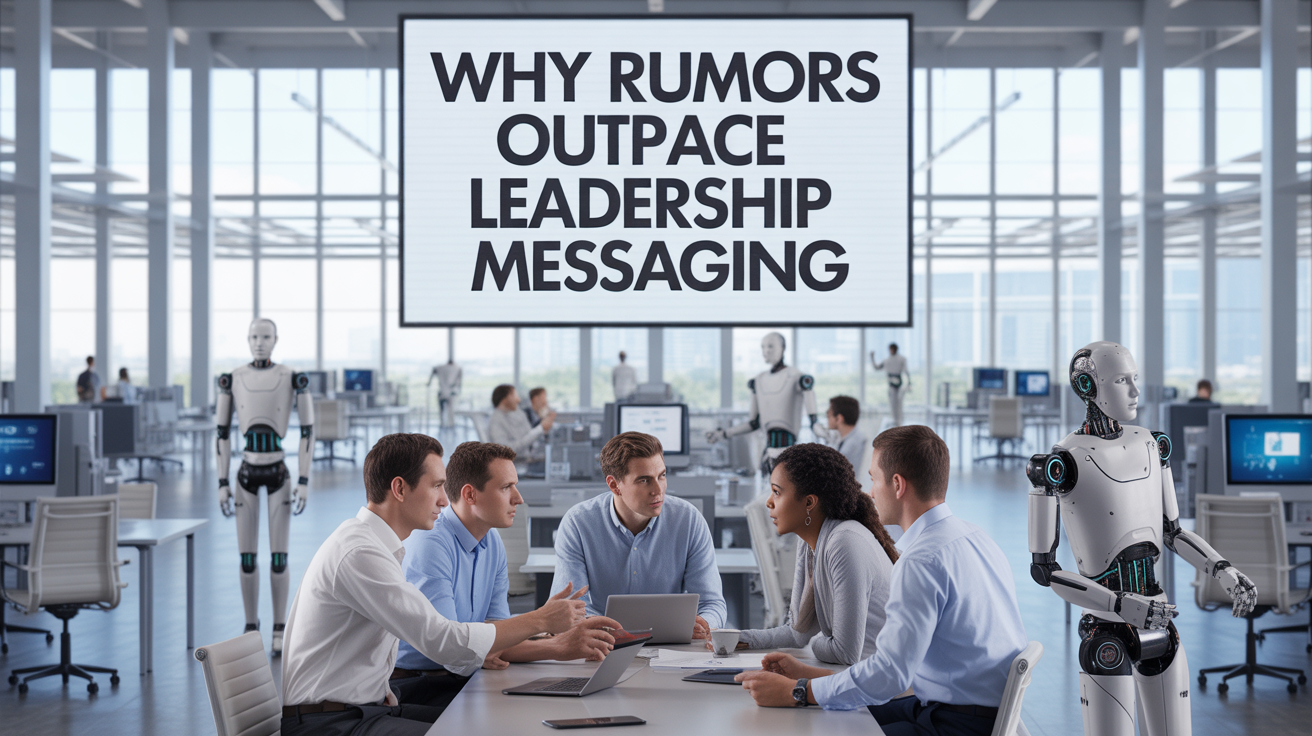
Executive and HR leadership reviewing unanswered workforce questions during an automation planning session
When leaders stay silent during automation planning, employees interpret the silence as a decision.

Leave a Reply

Trending

Discover more from Robot Integration Lab

Subscribe now to keep reading and get access to the full archive.

Continue reading