★★★★★

“The plan was defensible. It addressed people risk, operational risk, and financial exposure in a way the board could support without hesitation.”

— Ana, CEO

★★★★★

“Robot Integration Lab helped us move from reactive messaging to proactive workforce planning. HR finally had a seat at the table before decisions were locked in. ”

— Jessica F., Chief People Officer

★★★★★

“The strategy connected people decisions to financial outcomes. That made the investment easier to justify and easier to defend.””

— Marcus, VP Operations

★★★★★

“Because the plan wasn’t tied to any vendor, we could evaluate it objectively. That made the financial case clearer and the approval process smoother.”

— Jonathan, Board Chair

★★★★★

“his approach acknowledged legitimate workforce concerns early. That prevented escalation and kept labor discussions constructive instead of reactive.”

— Marleen W., CEO

★★★★★

“The work restored trust at a moment when automation could have fractured it. That alone changed the trajectory of the program.”

— David, Chief People Officer

★★★★★

“Employees stopped asking if they were being replaced and started asking how their roles would change. That shift was critical.”

— Jeff, VP Operations, U.S. Region

★★★★★

“The board deck made our robot plan feel credible, staged, and financially grounded.”

— Jonathan, Board Chair

★★★★★

“I’ve sat through too many change decks… this was the first one our managers didn’t roll their eyes at.”

— Carla, VP of HR

★★★★★

“HR usually gets called in when things go wrong. With your team, we were finally in the room from day one.”

— Luis, Chief People & Culture Officer

★★★★★

“I came into the meeting ready to block this project… and left asking how fast we could responsibly scale it.”

— Elaine, Independent Board Member

★★★★★

“Your team connected risk, people, and returns in a way even our most skeptical directors respected.”

— Mark, Audit Committee Chair

★★★★★

“I’ve been pitched ‘future of work’ for years… this was the first time someone showed me what to do on Monday.”

— Priya, CEO, Manufacturing Group

★★★★★

“Honestly, I expected a tech conversation. What we got was a leadership conversation we should’ve had years ago.”

— Robert, Global CEO

★★★★★

“The conversation wasn’t about robots…it was about people that would work with robots – the entire room was relieved”

— Paulo K, Brazil Sector CEO

★★★★★

“What mattered most was that employees felt respected, not managed. Robot Integration Lab helped us introduce robots without breaking trust or triggering unnecessary labor conflict. ”

— Jessica F., Chief People Officer

★★★★★

“Robot Integration Lab gave HR the language and structure we were missing. Conversations with employees shifted from fear to clarity, and we finally had a workforce plan we could stand behind.”

— Marcus, VP Operations

★★★★★

“Knowing Robot Integration Lab did not endorse any robotics vendor made the decision easy. The board approved quickly because the plan was credible, staged, and financially grounded.”

— Jonathan, Board Chair

★★★★★

“you gave us a robot roadmap both operators and board trusted. Thank you!”

— Ana, CEO

★★★★★

“WOW – and THANK YOU!! The team turned robot fear into curiosity and action inside our leadership group.”

— David, Chief People Officer

★★★★★

“I was told to ‘go get robots’ by the board … and you guys helped my team organize this into step-by-step action plan. THANK YOU ”

— Jeff, VP Operations, U.S. Region

★★★★★

“The board deck made our robot plan feel credible, staged, and financially grounded.”

— Jonathan, Board Chair

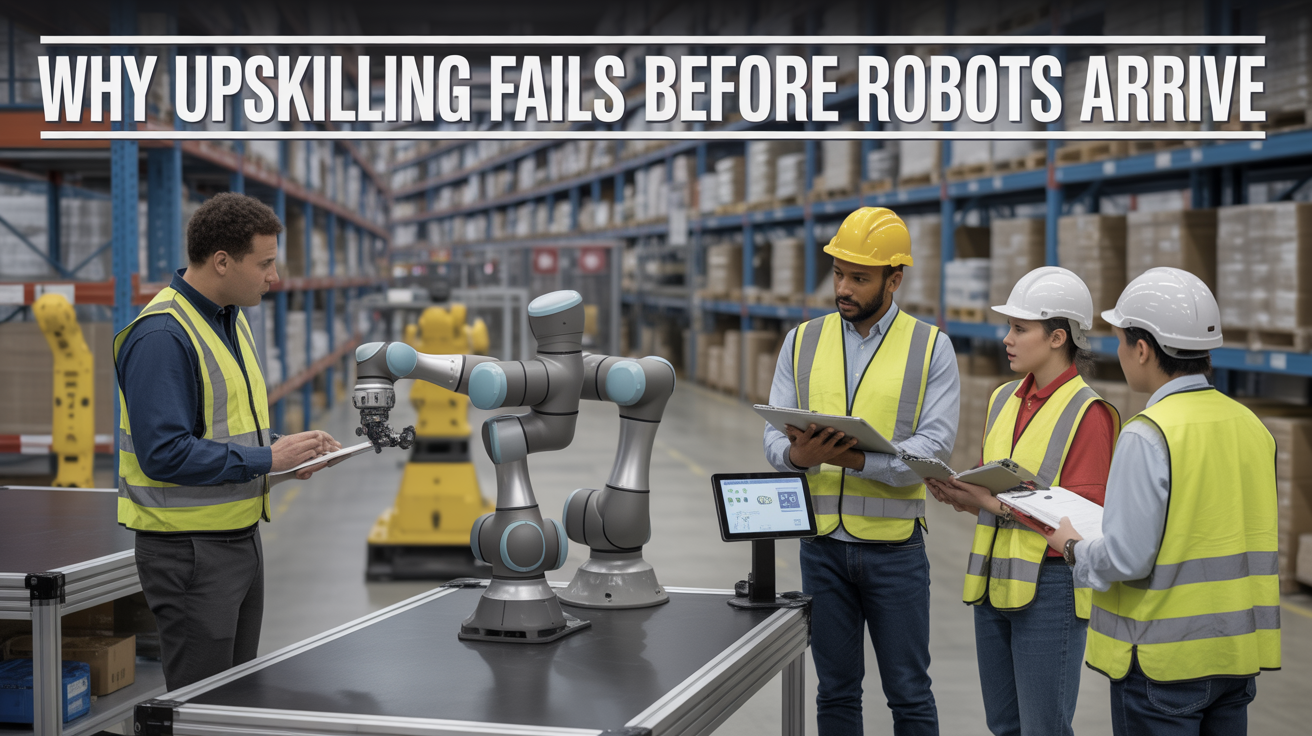
When Learning Participation Collapses During Automation — Why Upskilling Fails Before Robots Arrive

When Learning Participation Collapses During Automation — Why Upskilling Fails Before Robots Arrive

Upskilling rarely fails because people don’t care. It fails when learning feels unsafe.

During automation planning, organizations often invest early in training programs. New platforms launch. Curricula expand. Skill frameworks are announced.

And participation quietly drops.

Why Learning Disengages Before Deployment

Learning is a forward-looking investment. Employees commit time and effort based on what they believe it will protect or unlock.

Automation disrupts that calculus. When leaders cannot explain how new skills connect to future roles, progression, or recognition, learning stops feeling like preparation and starts feeling like exposure.

People hesitate not because they reject change, but because they cannot assess the return.

What Leaders Commonly Get Wrong

Low participation is often attributed to weak content, poor communication, or change fatigue.

Those explanations miss the underlying issue. Employees are not disengaged from learning. They are disengaged from unclear outcomes.

When learning does not map to security, mobility, or advancement, participation concentrates among those who already feel safe — and disappears everywhere else.

The Capability Risk Hidden Inside Training Metrics

Collapsed participation distorts readiness signals.

Completion rates look acceptable because the same small group completes everything. Meanwhile, large portions of the workforce opt out quietly.

By the time robots arrive, capability gaps are treated as operational surprises rather than governance failures.

How Robotic Workforce Integration Governs Learning

Robotic Workforce Integration treats learning as a governed pathway, not an optional benefit.

Leaders restore participation by making outcomes explicit:

Which roles require which skills. How learning affects progression and pay. Who owns capability decisions during transition. What protections exist for those who invest early.

Participation rises when learning feels consequential rather than speculative.

Executive Q&A

Why does learning participation collapse so early?

Because employees disengage when they can’t see how new skills will matter. Unclear outcomes make learning feel risky.

What is the earliest warning sign?

Enrollment drops and completion concentrates among a small, secure group.

Why do leaders misread this?

Low participation is blamed on motivation or content quality instead of uncertainty about future value.

How does disengaged learning affect readiness?

It delays capability development and shifts risk into deployment and operations.

How does Robotic Workforce Integration help?

It ties skills to roles, progression, and ownership so learning feels purposeful.

What should leaders govern first?

Which skills anchor future roles, how learning is rewarded, and who owns workforce capability decisions.

Automation rewards prepared organizations. Preparation depends on participation. Govern learning early — or capability will arrive late.

Name
If you’re responsible for the future of work inside your company, this is where you start.

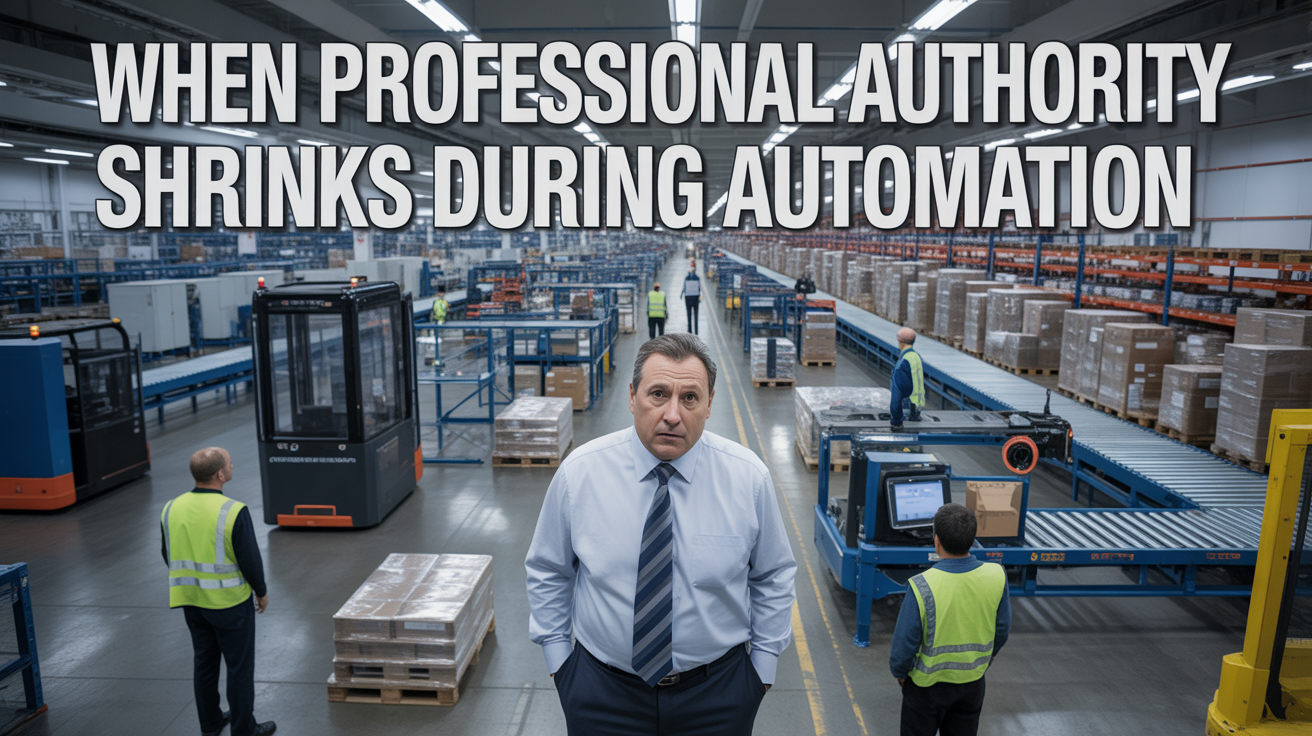
HR leadership reviewing declining training enrollment and skill development metrics during automation planning
Training doesn’t fail because content is weak — it fails when participation collapses under uncertainty.

Leave a Reply

Trending

Discover more from Robot Integration Lab

Subscribe now to keep reading and get access to the full archive.

Continue reading