★★★★★

“The plan was defensible. It addressed people risk, operational risk, and financial exposure in a way the board could support without hesitation.”

— Ana, CEO

★★★★★

“Robot Integration Lab helped us move from reactive messaging to proactive workforce planning. HR finally had a seat at the table before decisions were locked in. ”

— Jessica F., Chief People Officer

★★★★★

“The strategy connected people decisions to financial outcomes. That made the investment easier to justify and easier to defend.””

— Marcus, VP Operations

★★★★★

“Because the plan wasn’t tied to any vendor, we could evaluate it objectively. That made the financial case clearer and the approval process smoother.”

— Jonathan, Board Chair

★★★★★

“his approach acknowledged legitimate workforce concerns early. That prevented escalation and kept labor discussions constructive instead of reactive.”

— Marleen W., CEO

★★★★★

“The work restored trust at a moment when automation could have fractured it. That alone changed the trajectory of the program.”

— David, Chief People Officer

★★★★★

“Employees stopped asking if they were being replaced and started asking how their roles would change. That shift was critical.”

— Jeff, VP Operations, U.S. Region

★★★★★

“The board deck made our robot plan feel credible, staged, and financially grounded.”

— Jonathan, Board Chair

★★★★★

“I’ve sat through too many change decks… this was the first one our managers didn’t roll their eyes at.”

— Carla, VP of HR

★★★★★

“HR usually gets called in when things go wrong. With your team, we were finally in the room from day one.”

— Luis, Chief People & Culture Officer

★★★★★

“I came into the meeting ready to block this project… and left asking how fast we could responsibly scale it.”

— Elaine, Independent Board Member

★★★★★

“Your team connected risk, people, and returns in a way even our most skeptical directors respected.”

— Mark, Audit Committee Chair

★★★★★

“I’ve been pitched ‘future of work’ for years… this was the first time someone showed me what to do on Monday.”

— Priya, CEO, Manufacturing Group

★★★★★

“Honestly, I expected a tech conversation. What we got was a leadership conversation we should’ve had years ago.”

— Robert, Global CEO

★★★★★

“The conversation wasn’t about robots…it was about people that would work with robots – the entire room was relieved”

— Paulo K, Brazil Sector CEO

★★★★★

“What mattered most was that employees felt respected, not managed. Robot Integration Lab helped us introduce robots without breaking trust or triggering unnecessary labor conflict. ”

— Jessica F., Chief People Officer

★★★★★

“Robot Integration Lab gave HR the language and structure we were missing. Conversations with employees shifted from fear to clarity, and we finally had a workforce plan we could stand behind.”

— Marcus, VP Operations

★★★★★

“Knowing Robot Integration Lab did not endorse any robotics vendor made the decision easy. The board approved quickly because the plan was credible, staged, and financially grounded.”

— Jonathan, Board Chair

★★★★★

“you gave us a robot roadmap both operators and board trusted. Thank you!”

— Ana, CEO

★★★★★

“WOW – and THANK YOU!! The team turned robot fear into curiosity and action inside our leadership group.”

— David, Chief People Officer

★★★★★

“I was told to ‘go get robots’ by the board … and you guys helped my team organize this into step-by-step action plan. THANK YOU ”

— Jeff, VP Operations, U.S. Region

★★★★★

“The board deck made our robot plan feel credible, staged, and financially grounded.”

— Jonathan, Board Chair

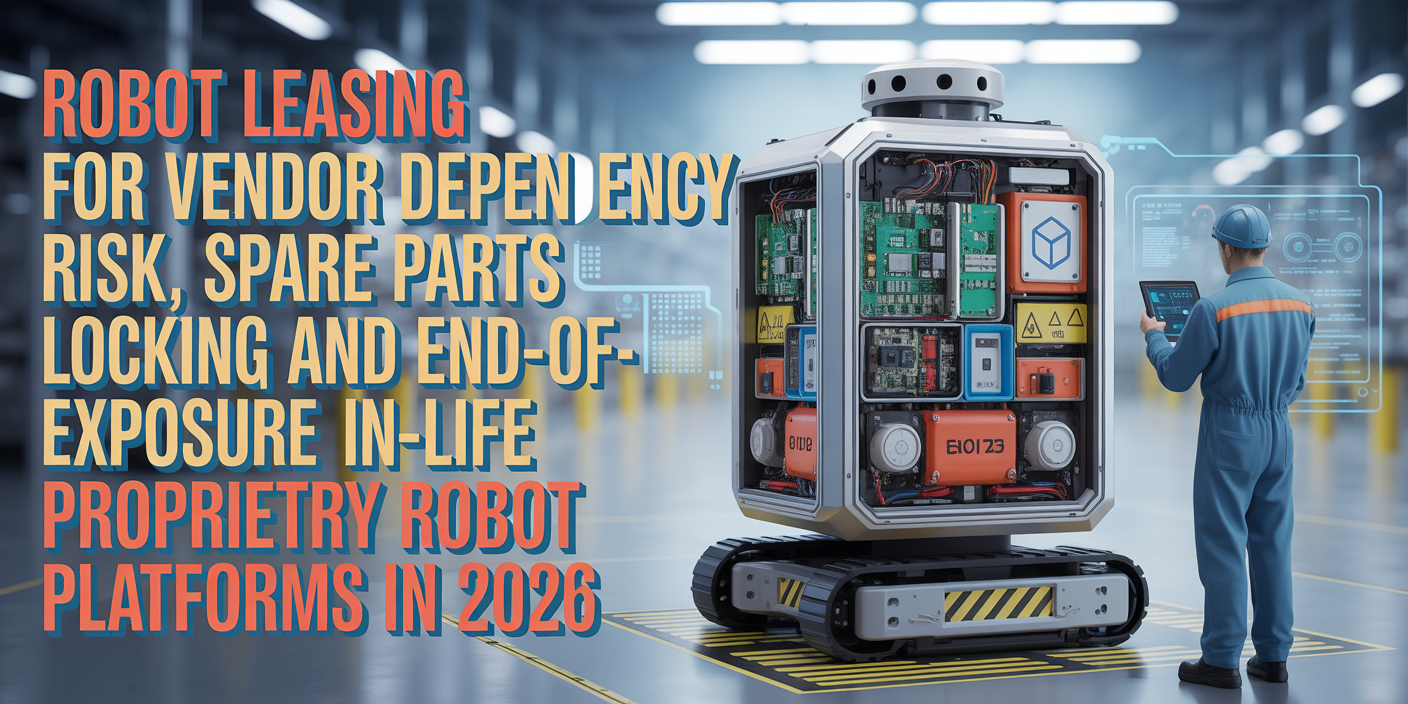
Robot Leasing for Vendor Dependency Risk, Spare Parts Lock-In, and End-of-Life Exposure in Proprietary Robot Platforms in 2026

Robot Leasing • Vendor Risk • Lock-In • Contracts • 2026

Robot Leasing for Vendor Dependency Risk, Spare Parts Lock-In, and End-of-Life Exposure in Proprietary Robot Platforms in 2026

Robots don’t trap companies. Platforms do.

If only one vendor can keep your fleet alive, you don’t own uptime — you rent it.

How Dependency Shows Up in Real Operations

  • ■ long lead times for simple components
  • ■ pricing power shifts at renewal
  • ■ forced upgrades tied to software support
  • ■ limited third-party maintenance options
  • ■ shrinking leverage over time

Dependency grows quietly.

The Four Platform-Driven Risk Multipliers

1. Spare Parts Lock-In

Only one supply chain exists.

2. Forced Refresh Cycles

Support ends before value does.

3. Exit Friction

Migrations are slow and expensive.

4. End-of-Life Exposure

Assets die before contracts end.

Control defines cost.

Executive Questions That Reveal Lock-In Risk

  • ■ Who can legally service the robots?
  • ■ Are parts available beyond the contract term?
  • ■ What happens when software support ends?
  • ■ Is there a defined exit path?
  • ■ Who pays for forced upgrades?

If exits aren’t defined, you don’t have one.

Contract Patterns That Preserve Leverage

  • ■ guaranteed parts availability windows
  • ■ end-of-life notice periods
  • ■ refresh pricing caps
  • ■ data and map portability rights
  • ■ clear decommissioning obligations

Leverage must be written.

Lease vs Buy Under Platform Dependency

Leasing Wins When

  • ■ platform maturity is uncertain
  • ■ vendor roadmap is evolving
  • ■ exit flexibility matters
  • ■ refresh risk must be shared

Buying Wins When

  • ■ platform is open or standardized
  • ■ parts access is guaranteed
  • ■ lifecycle is long and clear
  • ■ dependency is acceptable

Leasing limits lock-in. Ownership works when control is real.

Your 1–2–3 Path for Dependency-Aware Decisions

  1. 1 — Robot Integration Readiness Score
    Assess vendor and platform dependency risk.
    Take the Readiness Score
  2. 2 — Robot ROI Calculator
    Model forced refresh, parts pricing, and exit costs.
    Run the ROI Calculator
  3. 3 — Lease vs Buy Robots Calculator
    Compare models with end-of-life and lock-in risk embedded.
    Use the Lease vs Buy Calculator

Automation without leverage is dependency. Leaders who plan exits protect ROI, resilience, and credibility in 2026.

Name
If you’re responsible for the future of work inside your company, this is where you start.

Leasing de Robôs • Dependência • Lock-in • 2026

Leasing de Robôs e Risco de Dependência de Fornecedor em Plataformas Proprietárias em 2026

Plataforma prende. Contrato define saída.

Dependência não negociada vira custo.

Como o lock-in aparece

  • ■ peças só do fabricante
  • ■ prazos longos
  • ■ upgrades forçados
  • ■ pouca concorrência
  • ■ perda de poder de negociação

Dependência cresce.

Leasing ou compra sob lock-in?

Quando leasing faz mais sentido

  • ■ saída precisa ser flexível
  • ■ plataforma ainda evolui
  • ■ risco precisa ser dividido
  • ■ ciclo de vida é incerto

Quando comprar pode ser melhor

  • ■ acesso a peças é garantido
  • ■ ciclo de vida é claro
  • ■ dependência é aceita
  • ■ governança é forte

Contrato define liberdade. Quem planeja saída protege ROI em 2026.

Seu caminho 1–2–3 para decidir

  1. 1 — Robot Integration Readiness Score
    Avalie dependência de plataforma.
    Calcular o Readiness Score
  2. 2 — Robot ROI Calculator
    Modele upgrades forçados e peças.
    Rodar o ROI Calculator
  3. 3 — Lease vs Buy Robots Calculator
    Compare modelos com lock-in explícito.
    Comparar no Lease vs Buy Calculator

Liberdade é estratégia. Quem governa dependência protege ROI em 2026.

Name
If you’re responsible for the future of work inside your company, this is where you start.

Autonomous mobile robot serviced with proprietary spare parts inside a warehouse maintenance area.
When only one vendor can fix your robots, dependency becomes operational risk.

Leave a Reply

Trending

Discover more from Robot Integration Lab

Subscribe now to keep reading and get access to the full archive.

Continue reading