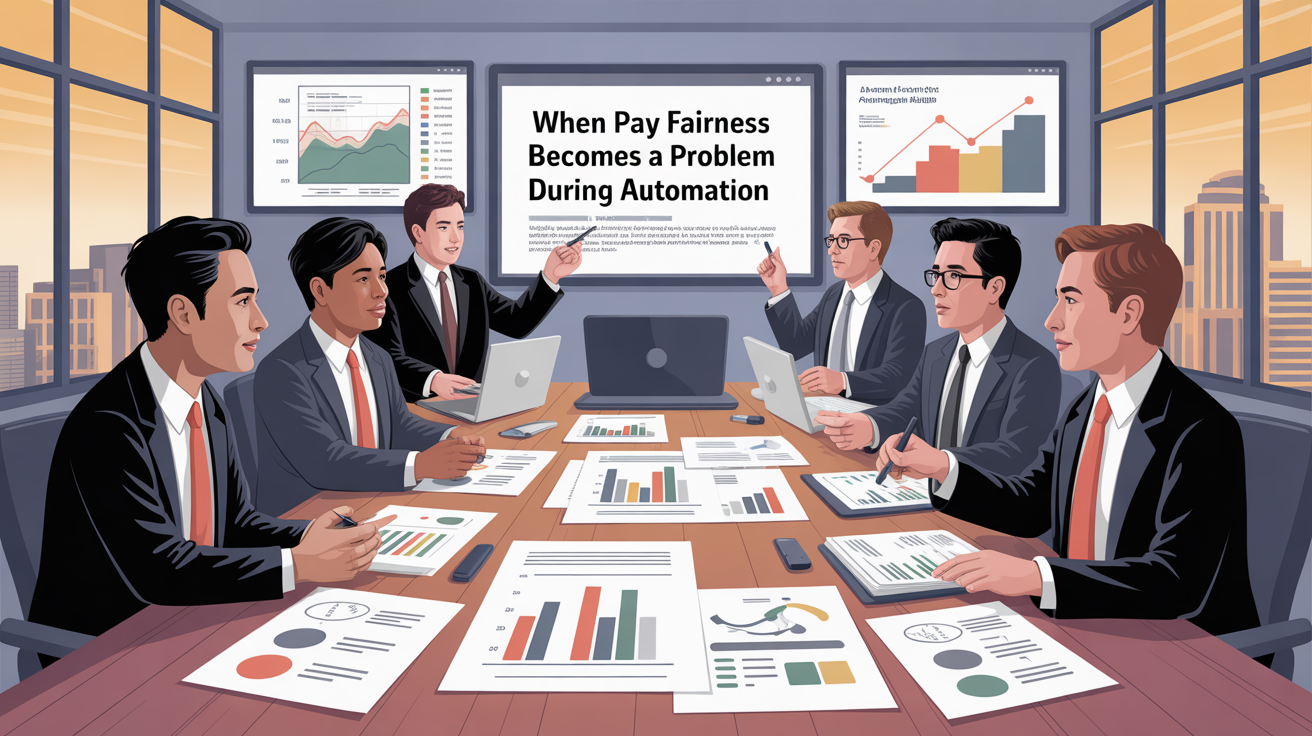
When Pay Fairness Feels Unstable During Automation — Why Compensation Trust Breaks Before Any Pay Changes
Compensation systems don’t fail when pay changes. They fail when meaning changes first.
During automation planning, organizations often reassure leaders that compensation is “out of scope.” Pay bands remain intact. Salaries are unchanged. From a governance perspective, fairness appears preserved.
From the workforce perspective, it is not.
Why Pay Trust Erodes Before Compensation Changes
Employees judge fairness contextually, not mathematically. They assess pay through role relevance, future value, and perceived protection.
Automation destabilizes those reference points. When some roles are discussed as “future-facing” and others are not, compensation begins to feel provisional — even if numbers stay the same.
Fairness erodes not because of pay gaps, but because role value feels unsettled.
What Leaders Commonly Misread
Leaders often equate fairness with consistency. If pay hasn’t changed, fairness must still hold.
Employees don’t experience fairness that way. They watch which skills are emphasized, which teams receive attention, and which roles are framed as strategic.
When those signals shift without compensation logic, trust thins quickly.
The Labor Risk Inside Perceived Inequity
Perceived unfairness narrows commitment. Employees invest less discretionary effort and reassess their long-term position.
HR begins receiving questions it cannot answer: not about pay today, but about value tomorrow.
By the time formal compensation reviews occur, belief in fairness has already weakened.
How Robotic Workforce Integration Governs Compensation Trust
Robotic Workforce Integration treats pay fairness as an outcome of role clarity.
Leaders stabilize trust by governing:
How role value is assessed as work evolves. Which skills anchor future compensation logic. How progression connects to automation exposure. Who owns pay-related decisions during transition.
Fairness survives change when meaning stays coherent.
Executive Q&A
Why does pay fairness feel unstable during automation?
Because automation disrupts how roles are valued. Fairness erodes when future relevance feels unclear.
What is the earliest warning sign?
Employees begin questioning role comparisons rather than pay amounts.
Why do leaders underestimate this risk?
Because payroll hasn’t changed. Leaders focus on numbers while employees assess meaning.
How does perceived unfairness affect retention?
It narrows commitment and accelerates quiet reassessment of long-term fit.
How does Robotic Workforce Integration help?
It governs role valuation and progression so compensation logic remains credible.
What should leaders govern first?
How role value is assessed under automation and who owns compensation-related decisions.
Automation doesn’t have to change pay to change fairness. If role value drifts, trust follows. Govern meaning early — or compensation will carry risk it cannot absorb.


Leave a Reply